

Abstract Black yeast, Aureobasidium pullulans is extracellularly produced β-(1,3), (1,6)-D-glucan (β-glucan) under certain conditions. In this study, using Glycine max cv. Kurosengoku (Kurosengoku soybeans), the production of β-glucan through fermentation of A. pullulans was evaluated, and the effects of A. pullulans cultured fluid (AP-CF) containing β-glucan made with Kurosengoku soybeans (kAP-CF) on a human monocyte derived cell line, Mono Mac
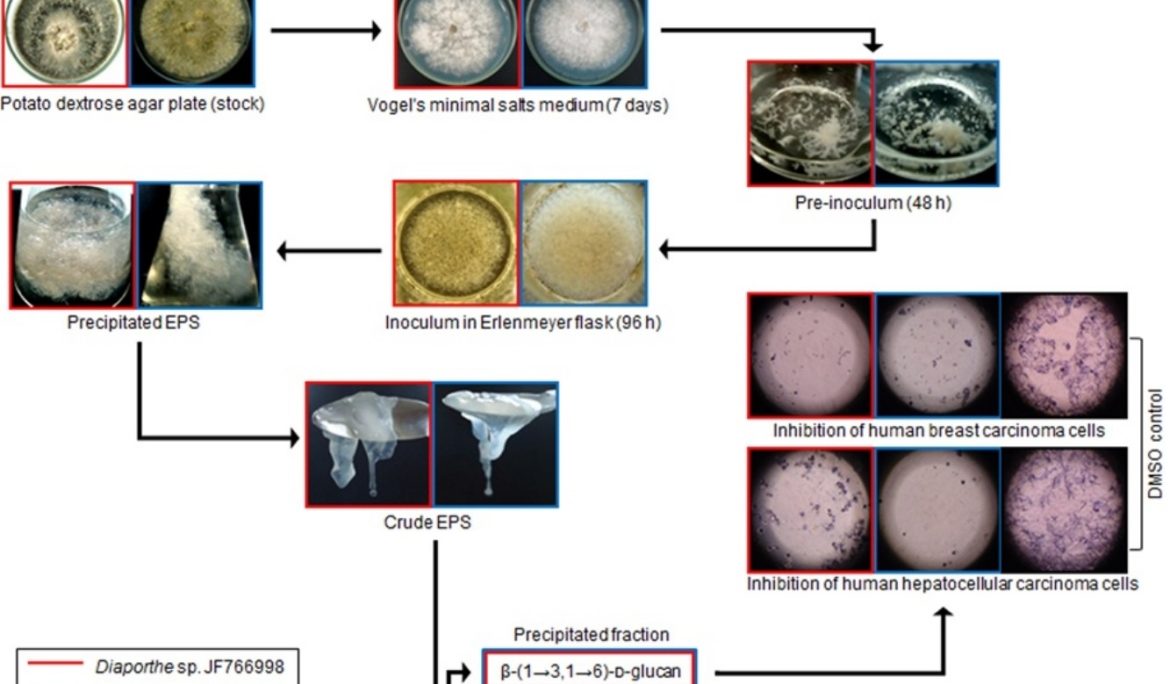
β-(1 → 3,1 → 6)-d-glucans produced by Diaporthe sp. endophytes: Purification, chemical characterization and antiproliferative activity against MCF-7 and HepG2-C3A cells Highlights Abstract This study reports the characterization and antiproliferative activity of exopolysaccharides (EPS) produced by submerged cultures of the endophytes Diaporthe sp. JF766998 and Diaporthe sp. JF767007 isolated from the medicinal plant Piper hispidum Sw.
Abstract β-Glucans are well known for its various bioactivities, but the underlying mechanism has not been fully understood. This study focuses on the anti-tumor effect and the potential mechanism of a branched β-(1, 3)-glucan (LNT) extracted from Lentinus edodes. The in vivo data indicated that LNT showed a profound inhibition ratio of ~75%
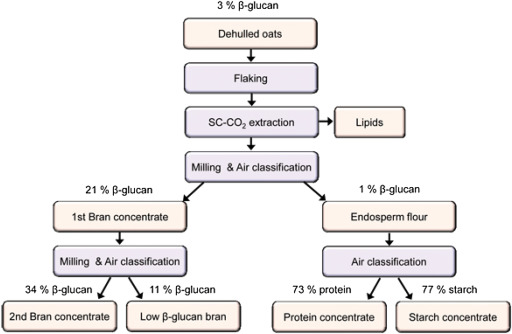
A critical review on production and industrial applications of beta-glucans Highlights •Beta-glucan has been increasingly used by the food and other industries. •Latest progress on production and application of glucans was summarized. •Physicochemical properties and chemical modifications of β-glucan were reported. •Potential value-added products derived from β-glucans were also summarized. •β-glucans will